


Phillip Island is easily one of Australia’s top nature destinations, with plenty of sun, surf and abundant wildlife comprising a gorgeous, laid back island just a couple of hours from Melbourne!

Yes, Phillip Island has koalas, both in the wild and at the Koala Conservation Reserve. Most visitors are surprised to find out they’re not actually native to the island at all. Here’s what you need to know before you go.
Are Koalas Native to Phillip Island?
No, they’re not. Koalas are native to eastern mainland Australia, not offshore islands. They were introduced to Phillip Island around 1870 as a conservation measure, at a time when koala populations were being decimated by hunters chasing their fur. Moving them to islands put them out of reach.
The story gets harder from there. In 1929, the koala population on Phillip Island collapsed when manna gum, their main food source, died off due to insect pests and fire. By 1930 to 1931, the 165 surviving koalas were moved to French Island and Quail Island. The population you’ll see today is the result of reintroductions that followed. It’s a genuine piece of local history, and it says a lot about how hard people have worked to keep this species alive.
Koala Conservation Reserve
The Koala Conservation Reserve is the main event for wildlife lovers visiting Phillip Island. Opened in 1992, it’s a protected area dedicated to koala research and conservation, not a zoo. The koalas live in eucalypt forest and surrounding bushland, going about their lives as they would anywhere in the wild.
The Reserve has two elevated treetop boardwalks that bring you right up to canopy level, where koalas spend most of their time. It’s the best way to get close without disturbing them. You’ll most likely spot them sleeping (koalas sleep up to 18 to 22 hours a day), but you might also catch one eating or moving between branches.
Down at ground level, the bushland walking tracks give you a shot at wallabies, echidnas, and plenty of birds. Give yourself time for both the boardwalks and the trails.
One more thing worth knowing: your ticket goes directly toward funding koala conservation research and education. A visit here isn’t just a tourist tick. It genuinely supports the work keeping this species going.
Book ahead before you visit, especially during peak periods. The Reserve gets busy.
Can You Hold a Koala at Phillip Island?
No. The Koala Conservation Reserve is observation only. You get close via the boardwalks and walking paths, but there’s no hands-on interaction. It’s one of the most common questions we get about Phillip Island.
Wild Koalas Beyond the Reserve
Koalas aren’t only found inside the Reserve. They turn up in trees across the island, particularly around dusk when they’re more active. You won’t spot them reliably the way you can at the Reserve, but if you’re out in the late afternoon, keep your eyes up in the eucalypts. No guarantees, but it does happen.
Koala Conservation: Why It Matters
The Australian Government listed the koala as endangered in 2022, an upgrade from the previous “threatened” status that reflects how serious the situation has become. Habitat loss, disease, vehicle strikes, and climate-driven bushfires are the main pressures on the population. The work happening at the Koala Conservation Reserve is part of a broader national effort to pull the species back.
Other Wildlife on Phillip Island
Koalas are a highlight, but Phillip Island has more wildlife than most places in the country. A full day on the island can tick off several species.
The Penguin Parade
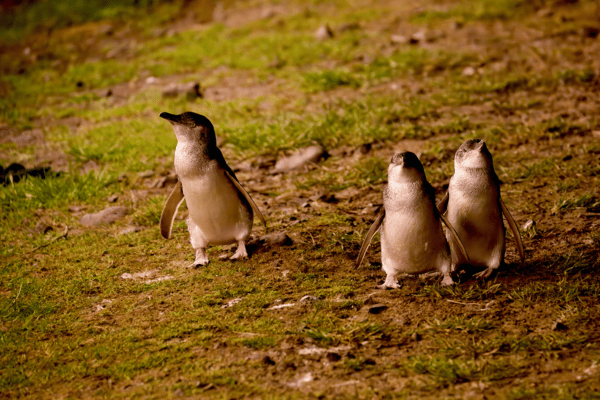
The Penguin Parade happens every evening at dusk, when little penguins come ashore at Summerland Beach after a day at sea. It’s one of Australia’s most famous wildlife events and a genuine bucket-list moment.
Seal Rocks
Seal Rocks, visible from the Nobbies boardwalk, is home to one of Australia’s largest fur seal colonies, with over 25,000 animals hauled out on the rocks. It pairs easily with a visit to the Koala Conservation Reserve on the same day.
Whales and Dolphins
Whales and dolphins can also be spotted seasonally from the Phillip Island coastline. Humpback, southern right, and occasionally orca whales pass through between May and October, with June and July the peak months. Cape Woolamai, Cowes, and the Nobbies are all good spots to scan from.
Plan Your Visit
The Koala Conservation Reserve is your most reliable option for seeing koalas on Phillip Island. Book ahead, give yourself time to walk both the treetop boardwalks and the bushland trails, and pair the visit with Seal Rocks and the Penguin Parade for a full day of wildlife.
If you’d rather leave the planning to us, our Phillip Island day tours include the Penguin Parade and can be combined with wildlife experiences across the island.
Frequently Asked Questions
Are there wild koalas on Phillip Island?
Yes. Koalas live both inside the Koala Conservation Reserve and in trees across the wider island. Your best chance of a reliable sighting is at the Reserve, but wild koalas do turn up in eucalypts around the island, particularly at dusk.
Are koalas native to Phillip Island?
No. Koalas are native to mainland eastern Australia. They were introduced to Phillip Island around 1870 as a conservation measure to protect them from hunting. The current population is the result of reintroductions following a population collapse in the late 1920s.
Where is the best place to see koalas on Phillip Island?
The Koala Conservation Reserve is by far the best option. The treetop boardwalks put you at canopy level, which is where koalas spend most of their time. You’re much more likely to get a good sighting here than searching for wild koalas across the island.
Can you hold a koala at Phillip Island?
No. The Koala Conservation Reserve is an observation-only experience. You can get close to koalas on the boardwalks and walking tracks, but there is no hands-on interaction.
What is the Koala Conservation Reserve on Phillip Island?
It’s a protected area dedicated to koala research and conservation, opened in 1992. The koalas live in their natural eucalypt forest habitat within the Reserve, and visitors can see them up close via elevated treetop boardwalks and ground-level bushland trails.
How long should you spend at the Koala Conservation Reserve?
Allow one to two hours to walk both the treetop boardwalks and the ground-level trails. That gives you enough time to spot koalas, look out for wallabies and echidnas, and not feel rushed.
Do you need to book the Koala Conservation Reserve in advance?
Yes, we recommend booking ahead, especially during school holidays and peak visitor periods. Check availability before you arrive on the island.
What other wildlife can you see on Phillip Island?
Phillip Island is one of Australia’s best wildlife destinations. Alongside koalas, you can see the Penguin Parade at Summerland Beach each evening, over 25,000 fur seals at Seal Rocks, wallabies and echidnas on the bushland trails, and humpback and southern right whales offshore between May and October.
Other Tips & Articles
Check out our other Phillip Island Tours

 See More Tours!
Melbourne City Tours
 See More Tours!
Great Ocean Road Tours


 24-Hour Flexibility!

